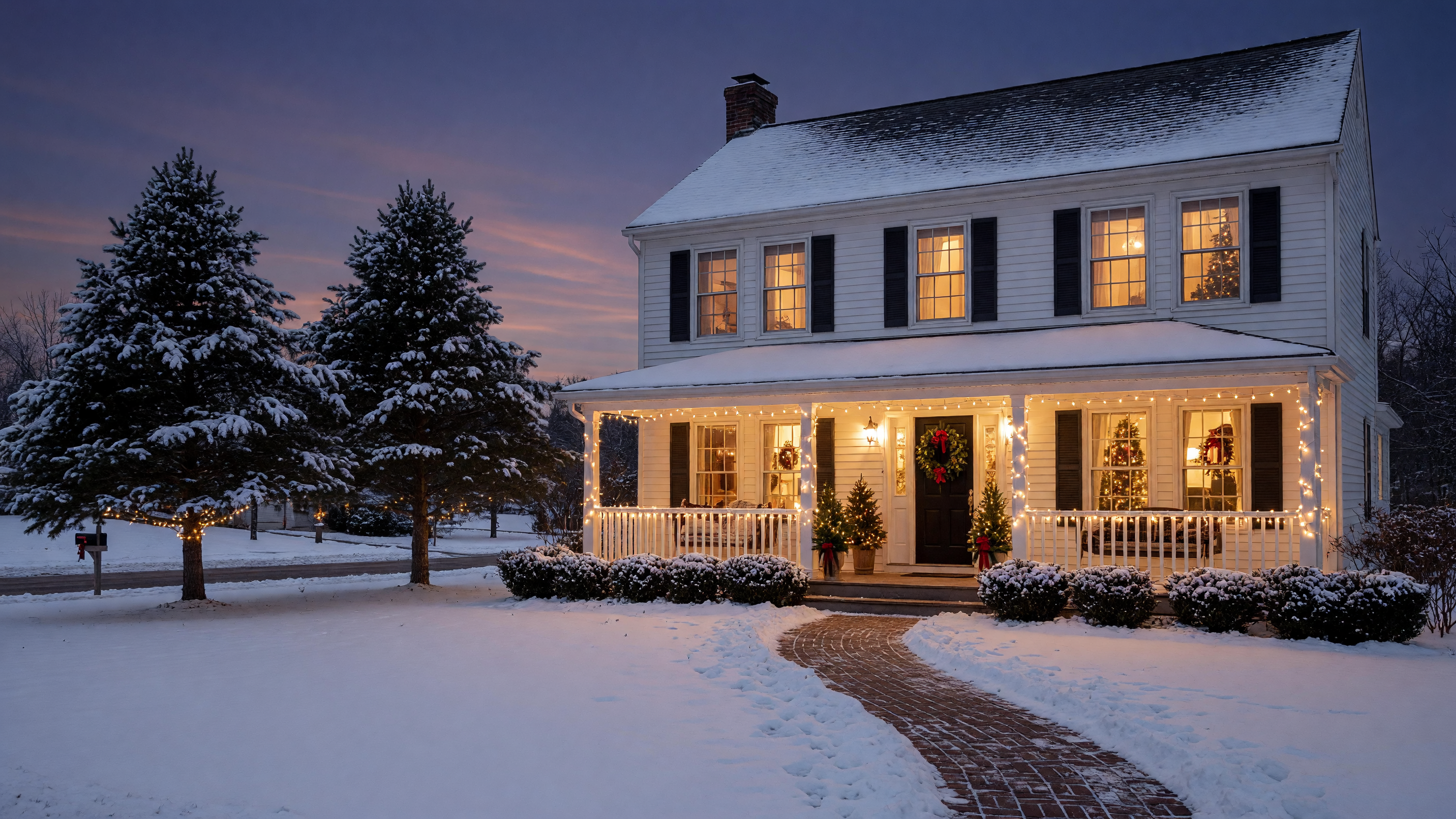

There's a common assumption in real estate that the holiday season — roughly mid-November through New Year's — is the wrong time to list a home. Many sellers wait until January, convinced that buyers disappear into holiday shopping and family obligations. But here's what actually happens: the sellers who list during the holidays face less competition, attract more motivated buyers, and often close at prices that rival or exceed what the spring market delivers.
I've helped sellers navigate the holiday market many times over my 20+ years in Mid-Michigan real estate, and the results consistently challenge the conventional wisdom. If you're considering whether to list now or wait, here's what you need to know about the holiday selling season — the advantages, the strategies, and the practical steps that make it work.
Why the Holiday Market Works
The holiday season brings two dynamics that work powerfully in a seller's favor: fewer listings and more serious buyers. Together, these create conditions that many sellers find surprisingly advantageous.
Fewer Listings = Less Competition
Most sellers pull back during the holidays. Inventory drops significantly from mid-November through December, which means your home faces less direct competition. Instead of being one of 15 listings in your price range, you might be one of four or five. Buyers who are actively searching during this period have fewer options — and fewer options means more attention on your listing.
In the Mid-Michigan market specifically, where inventory has remained tight across Genesee, Oakland, Livingston, and Lapeer counties, reduced holiday inventory amplifies this advantage. A well-priced, well-presented home in November or December can stand out in ways that would require significant marketing effort during the spring market glut.
Serious Buyers Only
People who are house-hunting during the holidays aren't casually browsing. They're motivated by real deadlines — a job relocation that starts in January, a life change that can't wait, or a desire to settle into a new home before the new year. These buyers are pre-approved, ready to act, and less likely to waste your time with lowball offers or endless showing requests.
In my experience, holiday buyers tend to move more quickly through the process. They know the market, they've been searching, and when they find the right home, they're prepared to make a decision. That efficiency benefits sellers who want a smoother, faster transaction.
Creating a Warm Showing Atmosphere
One of the real advantages of selling during the holidays is the emotional environment that seasonal décor creates. A well-staged holiday home feels warm, inviting, and aspirational — exactly the feelings that help buyers picture themselves living there. The key is tasteful restraint.
Do
- Use warm lighting throughout. Soft white string lights on a mantle, a wreath on the front door, and candlelight on the dining table create an instant sense of home. Buyers remember how a place made them feel.
- Keep decorations neutral and classic. Greenery, white lights, and natural textures (pinecones, burlap, cedar) work beautifully without overwhelming a room or clashing with a buyer's personal taste.
- Highlight your fireplace. If your home has a fireplace, make it a focal point. A lit gas fireplace or a stack of birch logs in the hearth creates the visual anchor buyers associate with comfort and Michigan winters.
- Add seasonal scent carefully. A hint of cinnamon, fresh pine, or baking bread creates a sensory experience that reinforces the emotional connection. Keep it subtle — nothing overpowering.
- Maintain impeccable curb appeal. In Michigan, that means a shoveled walkway, a salted driveway, clean gutters, and exterior lighting that makes your home glow at dusk. First impressions matter even more when daylight is limited.
Don't
- Over-decorate. A massive Christmas tree that dominates the living room, a yard full of inflatable figures, or garlands on every surface make it hard for buyers to see the home itself. The décor should enhance the space, not define it.
- Leave personal holiday items visible. Family Christmas cards, photos with Santa, and gift-wrapping stations remind buyers they're in someone else's home — the opposite of the blank-canvas feeling you want to create.
- Neglect outdoor maintenance. Snow removal, ice management, and exterior lighting aren't optional during a Michigan winter listing. A home that looks cared for on the outside signals quality on the inside.
Pricing Strategy for the Holiday Market
Pricing during the holidays requires a thoughtful approach. The reduced inventory means you have more breathing room, but the smaller buyer pool means overpricing can stall your listing at exactly the wrong time. Here's the framework I recommend:
- Price at market value, not aspirational. Holiday buyers are informed and decisive. They'll compare your home to the limited inventory available and recognize fair pricing. An overpriced listing during the holidays sits empty while serious buyers move to the next option.
- Consider the spring comparison. Compare your expected holiday sale price to what you'd realistically achieve in March or April, factoring in the carrying costs of waiting — mortgage payments, taxes, insurance, utilities, and maintenance. For many sellers, net proceeds after carrying costs are comparable.
- Use the scarcity advantage. With fewer competing listings, a well-priced home can attract multiple showings and even multiple offers. I've seen holiday listings receive two or three competing offers in situations that would have generated one in a crowded spring market.
For a deeper dive on pricing strategy, see our Selling Your Home in Mid-Michigan guide and our Seasonal Real Estate Guide.
Seasonal Staging Tips Specific to Michigan
Staging a Michigan home in winter requires attention to details that don't come up in warmer months:
- Control the temperature. Keep your home at a comfortable 68–72°F for showings. Buyers who step from a cold Michigan afternoon into a warm, bright home form an immediate positive impression. A cold house signals heating problems.
- Maximize natural light. With shorter days, open every blind and curtain before a showing. Turn on every light in the house. Replace any dim or burned-out bulbs. A bright home in winter feels welcoming; a dim one feels dreary.
- Address drafty windows and doors. If you know a window drafts, add a weatherstrip or use a decorative curtain to block the cold air. Buyers will stand near windows — it's natural to look at the view — and a drafty window creates a negative impression fast.
- Show your garage and mudroom. Michigan winters make a functional garage and mudroom essential. Declutter these spaces, add hooks for coats, and make sure the garage door opener works smoothly. Buyers are evaluating how the home handles winter — give them evidence it does well.
- Maintain the yard. Even in winter, visible yard maintenance matters. Keep the lawn clear of debris, trim any dead branches, and ensure the driveway is clear. If you have outdoor lighting, make sure it's working — a well-lit walkway on a dark December evening is both practical and attractive.
For additional staging strategies, our Home Staging Tips guide provides room-by-room advice that works year-round.
Practical Timeline: When to List
If you're considering the holiday selling window, here's a practical timeline:
- Early to mid-November: Ideal listing window. You'll capture buyers who want to close before the end of the year, and you'll have time to navigate the Thanksgiving period without rushing.
- Late November: Still viable, but plan for a brief slowdown during Thanksgiving week. Buyers and agents take time off, but showings typically resume quickly afterward.
- Early to mid-December: The window narrows but remains active. Highly motivated buyers — especially those with January job starts — are still searching. A December listing can attract serious attention precisely because so few others are on the market.
- Late December: Activity drops significantly during the last two weeks of the year. If you list now, set expectations for a brief quiet period and plan for increased interest in early January.
The Bottom Line
Selling during the holidays isn't for every seller — and that's precisely why it can work so well for those who are ready. With fewer competing listings, more motivated buyers, and the natural emotional appeal of a warm, well-staged home, the holiday market rewards preparation and confidence.
If you're wondering whether the timing is right for your situation, I'd be happy to walk through the current market conditions in your specific area and help you decide. Sometimes the best move is the one most people aren't making.
Schedule a consultation or contact me directly — let's talk through your options with no pressure and honest local expertise.