
In the Mid-Michigan real estate market, the homes that sell fastest and closest to asking price share a common trait: they're staged effectively. Home staging isn't about making your house look like a magazine cover — it's about removing barriers so buyers can see themselves living there. Whether you're selling a ranch in Grand Blanc, a colonial in Brighton, or a lakefront property near Fenton, these staging strategies will help you present your home in its best light — on any budget.
Research consistently shows that staged homes sell for 5–10% more than comparable unstaged properties and spend significantly fewer days on the market. In a competitive listing environment, that difference can mean tens of thousands of dollars and weeks of waiting.
Start with Decluttering — The Most Important Step
Decluttering is the single most impactful thing you can do before listing your home, and it costs almost nothing. The goal is simple: make every room feel as spacious, open, and inviting as possible. Buyers need to imagine their own furniture, their own family photos, and their own life in the space — and they can't do that when the rooms are filled with your belongings.
The 50% Rule
A practical benchmark: remove roughly 50% of the items from every room. That includes furniture, décor, books, countertop appliances, toys, and anything that creates visual clutter. If a room has two end tables, consider keeping one. If a bookshelf is full, take half the books off. If the kitchen counter holds five appliances, leave out one or two at most.
Renting a small storage unit for the duration of your listing is a common and worthwhile investment. The cost of a month-to-month unit — typically $50–$150 in Mid-Michigan — pays for itself many times over when your home sells faster and for a higher price.
What to Remove First
- Personal photos and memorabilia. Buyers need emotional distance from you to form an emotional connection with the home.
- Excess furniture. Overstuffed rooms make spaces feel smaller. Pull out pieces that block traffic flow or crowd the room.
- Collections and hobby items. Knick-knack shelves, model displays, and sports memorabilia are personal — they distract buyers from the home itself.
- Closet contents. Buyers will open closets. Half-empty closets look significantly larger and more appealing than overstuffed ones.
- Bathroom products. Clear countertops and shower ledges. Leave out only a neatly folded towel set and perhaps a small plant or candle.
Neutralize Your Décor
One of the most common staging mistakes is assuming buyers will share your taste. They won't — and they don't need to. The goal of décor is to be inoffensive, clean, and broadly appealing. Neutral doesn't mean boring; it means creating a blank canvas that lets buyers project their own vision.
Paint Colors That Work
Fresh paint is one of the highest-ROI improvements you can make before listing. In Mid-Michigan's current market, the most effective staging palettes include:
- Warm whites — Sherwin-Williams Alabaster, Benjamin Moore White Dove — clean, bright, and timeless.
- Soft grays and greiges — Agreeable Gray by Sherwin-Williams is one of the most popular staging colors nationwide for a reason: it reads warm, modern, and inviting in almost any lighting.
- Light beiges and taupes — These work especially well in Michigan's natural light, which tends toward cooler tones in winter and warmer in summer.
Avoid bold accent walls, bright colors, or highly saturated tones. If your home currently has a deep red dining room or a bright blue bathroom, a weekend of painting can eliminate one of the biggest objections buyers walk in with.
Décor Guidelines
- Use throw pillows and blankets in neutral or muted tones — creams, soft blues, warm grays.
- Add greenery. A few well-placed plants — real or high-quality faux — bring life to a staged room without adding clutter.
- Limit wall art to simple, inoffensive pieces. Abstract prints or landscape photography in neutral frames work well. Remove religious, political, or highly personal art.
- Coordinate metal finishes. Pick one — brushed nickel, matte black, or brass — and keep it consistent throughout visible spaces.
Curb Appeal Across Michigan Seasons
In Mid-Michigan's four-season climate, curb appeal isn't a one-time fix — it's an ongoing strategy that needs to work in every season. Buyers form their first impression within seconds of pulling up to your home, and in many cases, that impression is formed before they even step out of the car.
Spring and Summer Curb Appeal
- Fresh mulch is the single most cost-effective curb appeal upgrade. A few bags of dark mulch in garden beds instantly makes a property look cared for. Budget: $100–$200.
- Edging and trimming. Crisp edges along walkways and driveways, and neatly trimmed shrubs, signal attention to detail.
- Colorful plantings near the entryway. Two pots of annuals flanking the front door — petunias, geraniums, or impatiens — add immediate warmth. Budget: $30–$60.
- A clean, welcoming front door. Fresh paint or stain, polished hardware, and a new doormat set the tone. This is one of the highest-ROI improvements — often under $100 total.
Fall Curb Appeal
- Keep leaves cleared from walkways, driveways, and lawns consistently. A leaf-covered yard suggests neglect, even if the home is well-maintained.
- Add seasonal touches: mums in planters, a harvest wreath on the door, and a clean, swept porch create a welcoming atmosphere.
- Ensure gutters are clean and downspouts direct water away from the foundation. Buyers notice water stains on siding.
Winter Curb Appeal
- Shovel and salt promptly. An accessible, safe walkway signals that the home is cared for even in the off-season. Michigan winters are long — buyers are still searching.
- Keep the exterior lights on during dark afternoon showings — Michigan winter sunsets arrive before 5:30 PM.
- If ice dams are a recurring issue, address the ventilation and insulation problem before listing. Inspectors will flag it, and buyers will worry.
Lighting: The Underrated Staging Tool
Good lighting makes every room feel larger, warmer, and more inviting. Poor lighting makes even a beautiful home feel dark and dated. Fortunately, improving your home's lighting is one of the most affordable staging investments you can make.
- Open all blinds and curtains before every showing. Natural light is your biggest asset — especially in spring and fall when Michigan's light is beautiful and soft.
- Replace burned-out bulbs immediately. And match the color temperature — warm white (2700K–3000K) throughout the home creates a cohesive, inviting feel. Avoid mixing warm and cool bulbs.
- Upgrade dated light fixtures. A modern flush-mount ceiling light or a simple pendant can update a kitchen or bathroom for $50–$150. This is one of the best bang-for-your-buck improvements in staging.
- Add lamps to dark corners. A floor lamp in a dim living room corner or a table lamp on a nightstand adds warmth and eliminates shadows that make rooms feel smaller.
- Clean every fixture. Dusty ceiling fans, smudged lampshades, and dirty glass covers diminish the light output and the overall impression.
Room-by-Room Staging Guide
Each room in your home serves a specific purpose for buyers — and each room has its own staging priorities. Here's how to approach the most important spaces:
Living Room
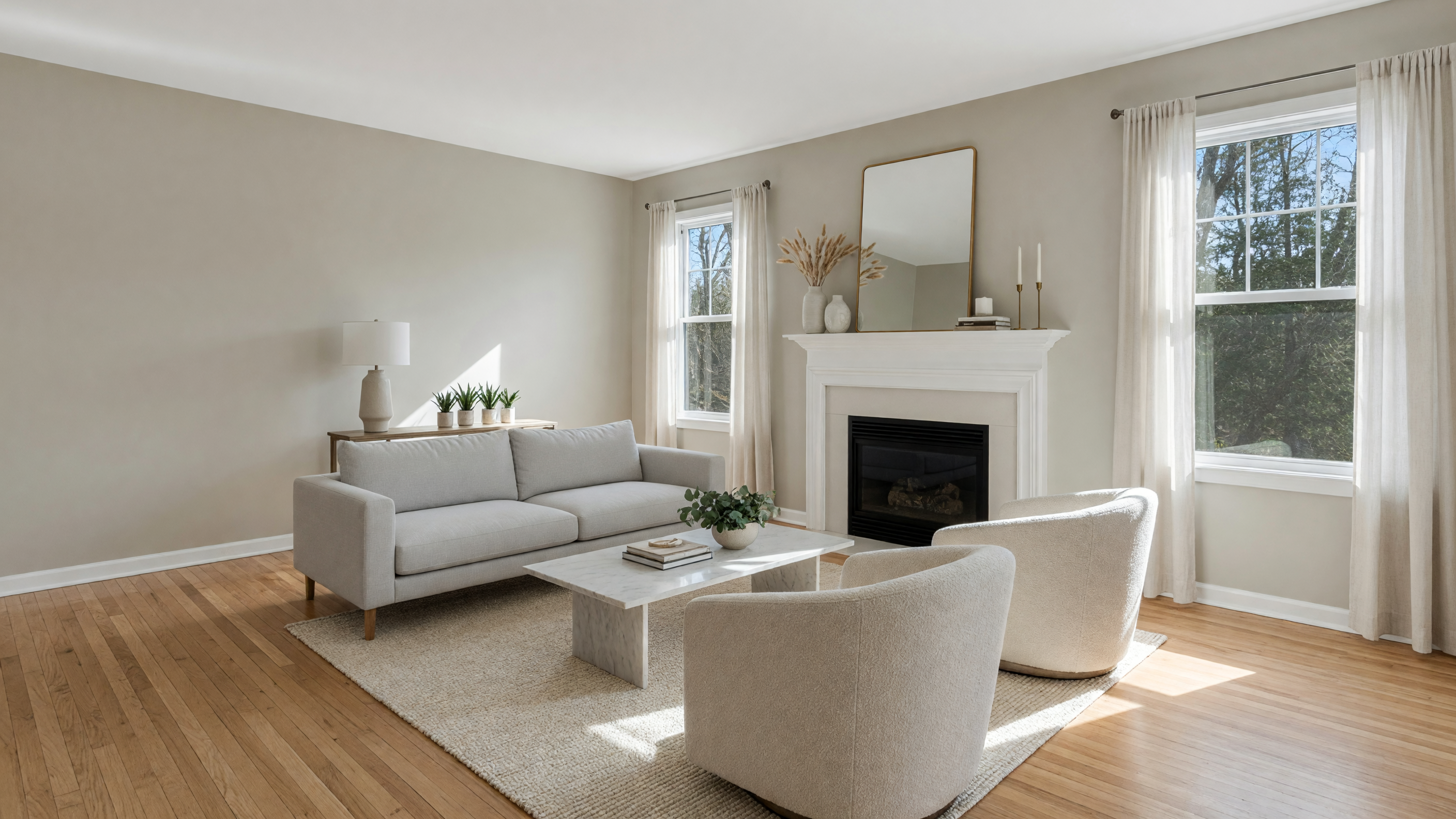
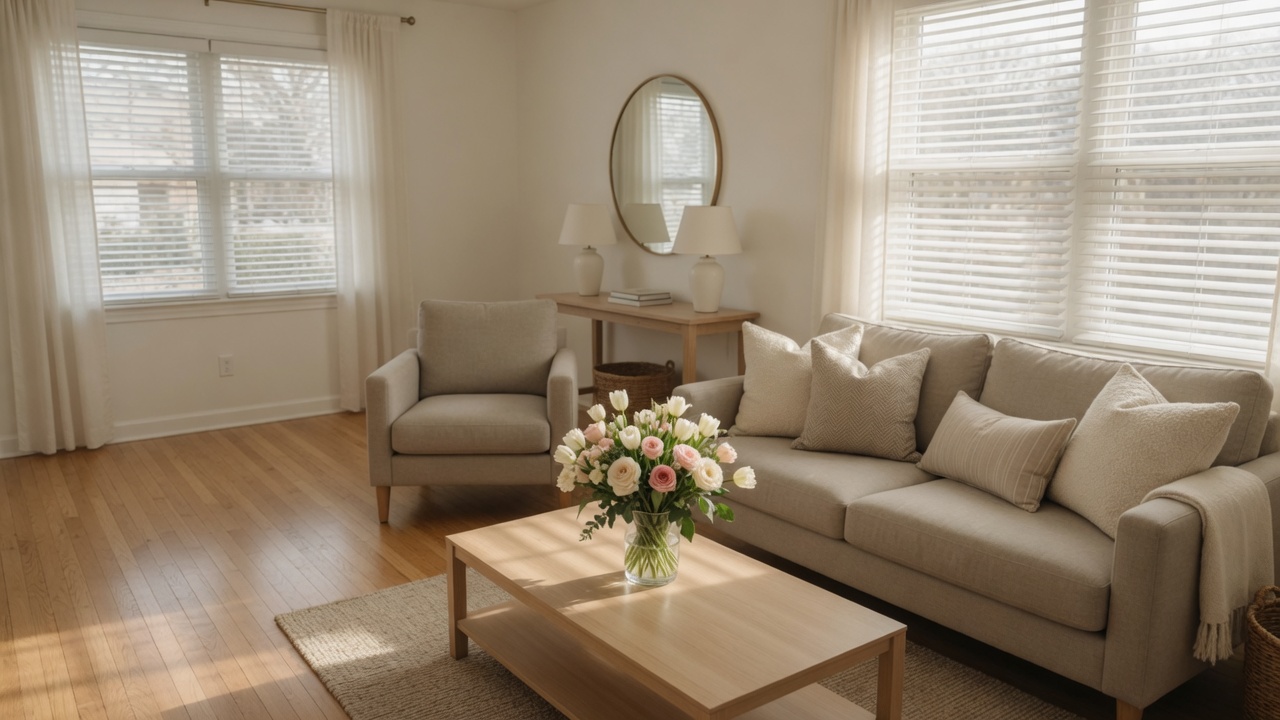
The living room is where buyers picture daily life. Arrange furniture to create a conversational grouping that faces a focal point — a fireplace, large window, or built-in shelving. Pull furniture away from walls by 4–6 inches to create a sense of depth. Ensure traffic flow is clear and unobstructed. Remove oversized or worn furniture that dominates the room. Add a throw blanket and a book on the coffee table to create a sense of warmth and livability.
Kitchen
The kitchen sells homes. Clear countertops of everything except one or two intentional items — a bowl of fresh fruit, a cookbook on a stand, or a small plant. Remove refrigerator magnets, papers, and children's artwork. If cabinet hardware is dated, replace it — new brushed nickel or matte black pulls cost $3–$8 each and dramatically modernize the space. Clean the inside of the oven and under the sink. If the grout is stained, a deep cleaning or re-grouting makes a significant visual difference.
Primary Bedroom
Make the primary bedroom feel like a retreat. Use white or neutral bedding, fluffed pillows, and a folded throw at the foot of the bed. Remove excess furniture — a bed, two nightstands, and a dresser is usually sufficient. Ensure closet doors open fully and the closet itself is half-empty and neatly organized. A bedside lamp on each nightstand adds symmetry and warmth.
Bathrooms
Bathrooms should feel spa-like, not lived-in. Replace worn towels with fresh white ones. Clear the shower of personal products — install a simple tension rod with a clean shower curtain if the glass door is dated. Re-caulk around the tub and shower if the existing caulk is discolored. A new toilet seat ($25–$40) and a fresh tube of caulk ($8) can transform a bathroom's impression. Add a small plant or a neatly folded hand towel for a finishing touch.
Basement
In Mid-Michigan, basements are expected — and their condition matters enormously. If the basement is finished, stage it as a functional space: a family room, home office, or playroom. If it's unfinished, make sure it's clean, dry, and well-lit. Remove any visible stored items. Address any moisture issues before listing — a musty basement is one of the fastest ways to lose buyer confidence. For more on what inspectors look for, see our guide to the home inspection process.
Front Entry and Mudroom
The entry sets the tone for the entire showing. In Michigan, where boots, coats, and seasonal gear pile up, the entry area needs special attention. Clear shoe racks, organize coats by number (remove out-of-season items), and ensure the space feels open rather than cramped. A clean console table with a simple vase or lamp creates a welcoming first impression.
Before and After: What Changes
The most effective staging transformations follow a consistent pattern. Here's the before-and-after thinking that drives results:
- Before: Cluttered countertops, personal photos, bulky furniture, dark corners, worn carpet. After: Clear surfaces, empty walls, streamlined furniture, bright lighting, clean floors. The home feels larger, newer, and move-in ready.
- Before: Bold wall colors, mismatched hardware, dated light fixtures. After: Neutral paint, consistent hardware, modern fixtures. The home feels updated without requiring a full renovation.
- Before: Overgrown landscaping, peeling paint, a tired front door. After: Fresh mulch, trimmed beds, painted front door, clean walkway. The home signals pride of ownership from the curb.
Budget-Friendly Staging: What to Spend and What to Skip
You don't need to invest thousands to stage your home effectively. Here's a realistic budget breakdown for sellers who want maximum impact on a modest budget:
- Essential ($200–$500): Fresh paint in key rooms, new light bulbs, cleaning supplies, mulch, and a new doormat. This covers the fundamentals.
- Moderate ($500–$1,500): Everything above plus cabinet hardware updates, a new front door or fresh paint, new bathroom accessories, updated light fixtures, and a storage unit rental.
- Professional ($2,000–$5,000): A professional stager for consultation or full staging, professional cleaning, carpet cleaning or replacement, and landscaping improvements.
In my experience, sellers who invest even the essential-level budget see noticeably better results — faster showings, stronger offers, and fewer days on market.
The Bottom Line
Home staging is one of the most cost-effective strategies for sellers in Mid-Michigan. It's not about spending a fortune — it's about making thoughtful changes that help buyers see the full potential of your home. From decluttering and neutralizing décor to maximizing light and addressing seasonal curb appeal, every improvement you make works in your favor during the most critical window of the selling process: the first two weeks on market.
If you're preparing to sell, I'd love to walk through your home and provide a specific staging plan tailored to your property and your market. With over 20 years of experience selling homes across Genesee, Oakland, Livingston, and Lapeer counties, I know exactly what buyers in each community are looking for.
Schedule a consultation or contact me directly — let's make sure your home makes the strongest possible impression.