
One of the first questions I hear from buyers considering Mid-Michigan is some version of "How far is the drive?" It's a practical question that shapes everything else — which communities make the short list, what kind of home you target, and how you balance the lifestyle you want with the professional obligations you need to meet. The good news is that Mid-Michigan is served by a highway network that connects you to Detroit, Flint, Ann Arbor, Lansing, and beyond in ways that make a wide range of communities livable for commuters.
This guide covers the major highways, realistic drive times from key communities, and the lifestyle-commute tradeoffs that help buyers find the right balance. Whether you're commuting five days a week, splitting time between home and office, or fully remote, these details matter when choosing where to put down roots.
The Major Highways
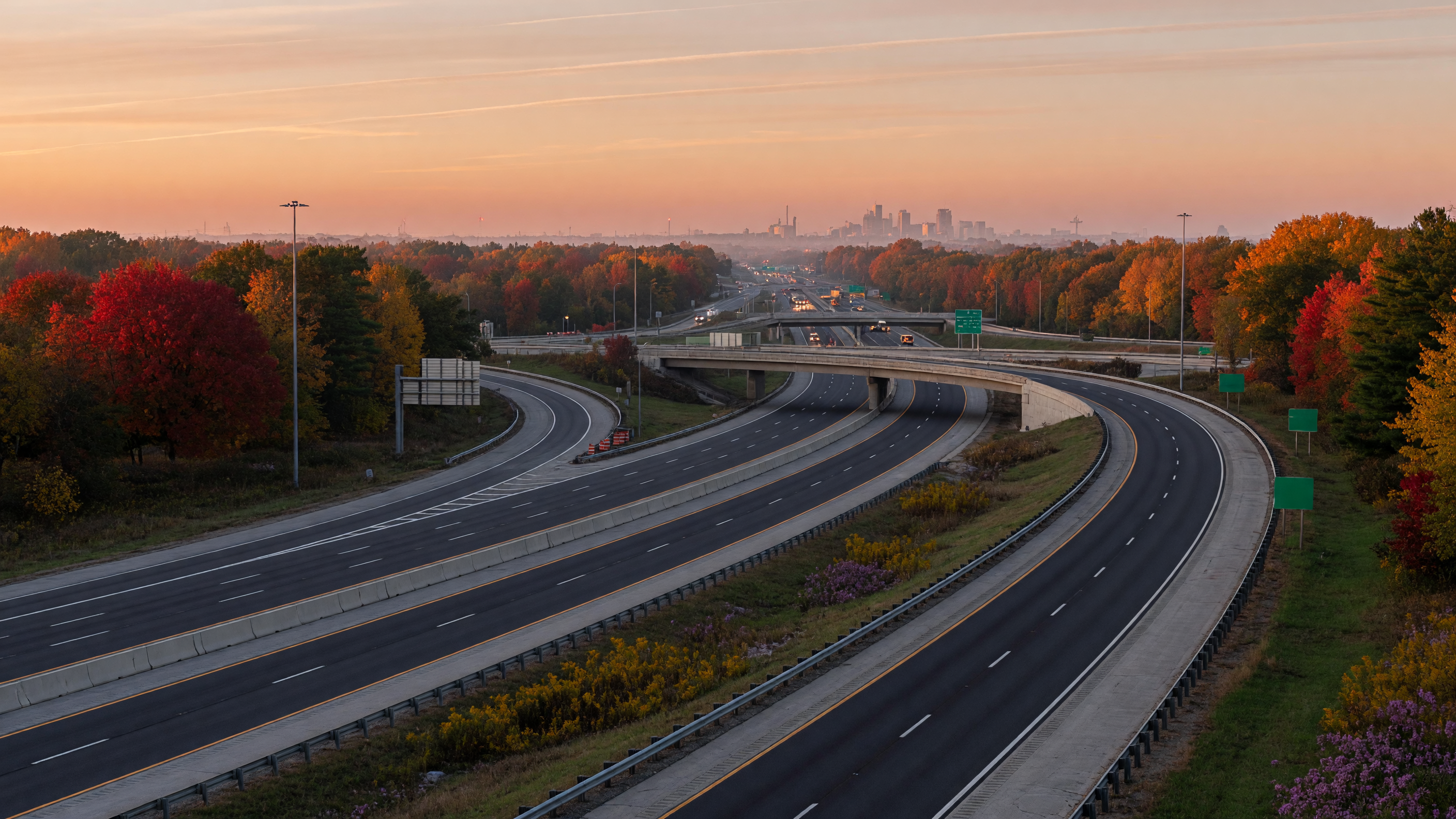
Three highways form the backbone of Mid-Michigan's commuter network:
- I-75 — The region's primary north-south artery, running from Detroit through Auburn Hills, Pontiac, and Holly before continuing north toward Flint, Saginaw, and the Mackinac Bridge. I-75 is the most direct route from northern Oakland County and Genesee County communities to downtown Detroit and the I-696/I-96 interchange network.
- US-23 — Running north-south through the eastern side of the region, US-23 connects Ann Arbor to Flint and beyond. It's the primary commuter corridor for communities in Livingston County and eastern Genesee County heading to Ann Arbor, the University of Michigan, or the Detroit metro's eastern employment centers.
- I-69 — An east-west highway connecting Flint to Lansing and beyond. I-69 is essential for commuters heading west to the state capital, Michigan State University, or the broader Lansing-East Lansing metro. It also connects to I-75 near Flint, creating a useful interchange for Genesee County residents.
Drive Times from Key Communities
Drive times below reflect typical conditions — morning or midday travel without major weather events or construction delays. Peak-hour traffic, especially on I-75 south of Auburn Hills, can add 15–30 minutes during morning rush. Always plan for Michigan winter conditions November through March.
From Grand Blanc
- Downtown Flint: 15–20 minutes via I-69 or Bristol Road
- Downtown Detroit: 55–70 minutes via I-75 south
- Ann Arbor: 50–65 minutes via US-23 south
- Lansing: 55–70 minutes via I-69 west
Grand Blanc's position near the I-69/I-75 interchange makes it one of the most commute-versatile communities in the region. Our Top 10 Reasons to Move to Grand Blanc and Grand Blanc: More Than Just a Commuter Town cover the full picture.
From Fenton
- Downtown Flint: 20–25 minutes via I-75 or Silver Lake Road
- Downtown Detroit: 60–75 minutes via I-75 south
- Ann Arbor: 55–70 minutes via US-23 south
- Lansing: 60–75 minutes via I-69 west
Fenton sits slightly north of Grand Blanc but still benefits from I-75 access. The tradeoff is a few extra minutes on the road — but the lake lifestyle and downtown charm make that time well spent. Our Fenton & Linden guide and Holly & Fenton lake country guide have more detail.
From Holly
- Downtown Flint: 25–30 minutes via I-75 north or Grange Hall Road
- Downtown Detroit: 50–65 minutes via I-75 south
- Ann Arbor: 60–75 minutes via US-23 south
- Lansing: 65–80 minutes via I-69 west
From Davison
- Downtown Flint: 10–15 minutes via I-69 or Irish Road
- Downtown Detroit: 55–70 minutes via I-75 south
- Ann Arbor: 55–70 minutes via US-23 south
- Lansing: 60–75 minutes via I-69 west
Davison's central Genesee County location makes it especially convenient for Flint-area employment and a strong choice for buyers who want a small-town feel with quick access to city amenities. See our Davison community guide for more.
From Linden and Flushing
- Downtown Flint: 15–25 minutes (Linden 25 min, Flushing 15 min)
- Downtown Detroit: 60–80 minutes via I-75 south
- Ann Arbor: 55–70 minutes via US-23 south
Both communities offer a rural-lake lifestyle with manageable commutes to Flint. For more on Linden, see our Fenton & Linden guide.
From Lake Orion and Clarkston
- Downtown Detroit: 40–55 minutes via I-75 south
- Troy / Auburn Hills: 15–25 minutes via I-75
- Ann Arbor: 50–65 minutes via US-23 south
- Flint: 30–40 minutes via I-75 north
Lake Orion and Clarkston are among the closest Mid-Michigan communities to Oakland County's major employment centers. For buyers who split time between Detroit and Mid-Michigan, these communities offer the shortest commute with the strongest lifestyle payoff. Our Clarkston & Lake Orion guide covers the full picture.
From Livingston County (Brighton, Hartland, Howell)
- Ann Arbor: 25–40 minutes via US-23 south
- Downtown Detroit: 50–70 minutes via I-96 east or US-23 south to I-96
- Lansing: 55–70 minutes via I-96 west
- Flint: 40–50 minutes via US-23 north
Livingston County communities — especially Brighton, Hartland, and Howell — are the top choice for Ann Arbor commuters and Lansing commuters alike. Our Livingston County relocation guide goes deeper on schools, lifestyle, and housing options.
Remote Work Considerations
The shift to remote and hybrid work has changed the calculus for many buyers. If you're working from home three or more days a week, a 60-minute commute that would be burdensome five days a week becomes entirely manageable. Several Mid-Michigan communities have become especially attractive to remote workers for exactly this reason:
- Lake Fenton and Fenton — Lake lifestyle, revitalized downtown, and strong community. Ideal for buyers who commute to Detroit once or twice a week but want the rest of their week to feel like a retreat.
- Holly — State park access, small-town feel, and I-75 convenience. Excellent for buyers who want outdoor recreation within minutes of home and a Detroit commute that's realistic two or three days a week.
- Grand Blanc — Strong schools, golf courses, community events, and a 15-minute drive to Flint's healthcare and education employers. A balanced choice for hybrid commuters.
- Brighton and Hartland — Livingston County's top communities for buyers who work remotely and want proximity to Ann Arbor's culture and restaurants without Ann Arbor's housing prices.
For remote workers, internet infrastructure matters. Most subdivisions and village areas across these communities offer reliable high-speed broadband, but it's worth verifying availability at specific addresses — particularly in more rural areas of Lapeer, Shiawassee, and northern Genesee counties.
Which Communities Offer the Best Balance?
The "best" community depends on what you're optimizing for. Here's a practical framework:
- Best for Detroit commuters: Lake Orion, Clarkston, Holly, or Grand Blanc — all sit along I-75 with drive times under 70 minutes and strong lifestyle value.
- Best for Ann Arbor commuters: Brighton, Hartland, Howell — Livingston County communities with US-23 access and a 25–40 minute drive to downtown Ann Arbor.
- Best for Lansing commuters: Fenton, Grand Blanc, Linden — I-69 provides a direct route, and these communities offer lake and small-town living with a manageable drive.
- Best for Flint-area employment: Davison, Grand Blanc, Flushing, Swartz Creek — all within 15–20 minutes of Flint's major employers with established neighborhoods and good schools.
- Best for fully remote workers: Fenton, Holly, Lake Orion, Linden — maximize lifestyle, lake access, and outdoor recreation while keeping occasional city access feasible.
A Note on Michigan Winters and Commuting
Michigan winters are a real factor in commute planning. Snow, ice, and reduced visibility can add 15–30 minutes to any commute during significant weather events. Communities along I-75 tend to be plowed and treated quickly, but secondary roads — especially in rural Lapeer, Shiawassee, and Livingston counties — can be slower to clear.
If winter driving is a concern, look for communities with well-maintained state highways and minimal two-lane road segments in your commute route. Grand Blanc, Davison, and Brighton all score well on this metric because their commute corridors are primarily major highways and well-traveled local roads.
The Bottom Line
Mid-Michigan's highway network gives buyers real options. You can live on a lake in Fenton, hike state park trails in Holly, send your kids to top-rated Brighton schools, or enjoy Grand Blanc's community events — all while maintaining a realistic commute to the region's major employment centers. The key is knowing your commute frequency, your tolerance for drive time, and the lifestyle priorities that matter most.
If you're weighing commute options as part of a move to Mid-Michigan, I'd love to help you think through the tradeoffs. With 20+ years of experience across these communities, I understand how commute realities shape daily life — and how to find the community that fits.
Schedule a consultation or contact me directly — let's map your commute to the community that works best.