
The home inspection is one of the most critical steps in any real estate transaction — and in Mid-Michigan, where homes face four distinct seasons, freeze-thaw cycles, and a range of construction styles and ages, the inspection process carries particular importance. Whether you're buying your first home in Grand Blanc, selling a property in Brighton, or evaluating a lakefront listing near Fenton, understanding the inspection process from both sides helps you navigate this phase with confidence.
What a Home Inspection Actually Covers
A standard home inspection is a visual, non-invasive evaluation of a home's major systems and structural components. It's performed by a licensed inspector and typically takes two to four hours, depending on the size and condition of the property. The inspector's job is to identify material defects — items that are safety hazards, structurally significant, or could lead to major repair costs.
Here's what a standard inspection covers:
- Structural components — Foundation, framing, floor joists, roof structure, and load-bearing walls. The inspector looks for cracks, settling, bowing, and signs of structural movement.
- Roofing system — Shingle condition, flashing, gutters, downspouts, attic ventilation, and signs of ice dam damage or leaks. In Michigan, roof condition is one of the most scrutinized items.
- Electrical system — Service panel, wiring type, outlets, switches, GFCI protection, and visible signs of outdated or unsafe wiring.
- Plumbing — Visible pipes, water heater, water pressure, drainage, and signs of leaks or corrosion.
- HVAC system — Furnace, air conditioning, ductwork, and thermostat. Age and condition are critical — a furnace nearing the end of its lifespan is a negotiation point.
- Interior and exterior — Walls, ceilings, floors, windows, doors, siding, grading, and drainage.
- Insulation and ventilation — Attic insulation depth, vapor barriers, and evidence of moisture or mold in crawlspaces and attics.
A standard inspection does not cover specialized systems. In Mid-Michigan, you'll often need additional inspections depending on the property:
- Radon testing — Highly recommended across all of Michigan, where radon levels vary widely by location. A separate radon test ($150–$250) is standard practice.
- Well water testing — Required for homes on private wells (common in rural Livingston, Lapeer, and Shiawassee counties). Tests for coliform bacteria, nitrates, and other contaminants.
- Septic inspection — Required for homes with private septic systems. Evaluates tank condition, drain field integrity, and compliance with local health codes.
- Sewer scope — A camera inspection of the main sewer line, especially recommended for older homes where the line may be clay, cast iron, or Orangeburg pipe.
- Termite/pest inspection — Not always required in Michigan but recommended, particularly for homes with wood basements or crawlspaces.
Common Issues Found in Michigan Homes
Michigan's climate creates a specific set of challenges that inspectors encounter regularly. Understanding these issues — before the inspection report lands on your kitchen table — helps both buyers and sellers prepare.
Moisture and Water Intrusion
This is the most common category of inspection findings in Mid-Michigan. Michigan's heavy snowfall, spring thaws, and periodic heavy rains put constant pressure on foundations, basements, and crawlspaces. Inspectors regularly find:
- Efflorescence (white mineral deposits) on basement walls, indicating past or ongoing moisture migration
- Water stains on basement floors or walls, particularly after heavy rain or snowmelt
- Improper grading that directs water toward the foundation rather than away from it
- Missing or damaged downspout extensions that don't carry water far enough from the foundation
- Mold or fungal growth in crawlspaces, attics, or basement corners — often linked to inadequate ventilation
For sellers, addressing moisture issues before listing is critical. A dry basement is an expectation for buyers; a damp one is a dealbreaker. Waterproofing, grading corrections, and sump pump upgrades are among the most common pre-listing investments that pay off at the inspection table.
Foundation Cracks from Freeze-Thaw Cycles
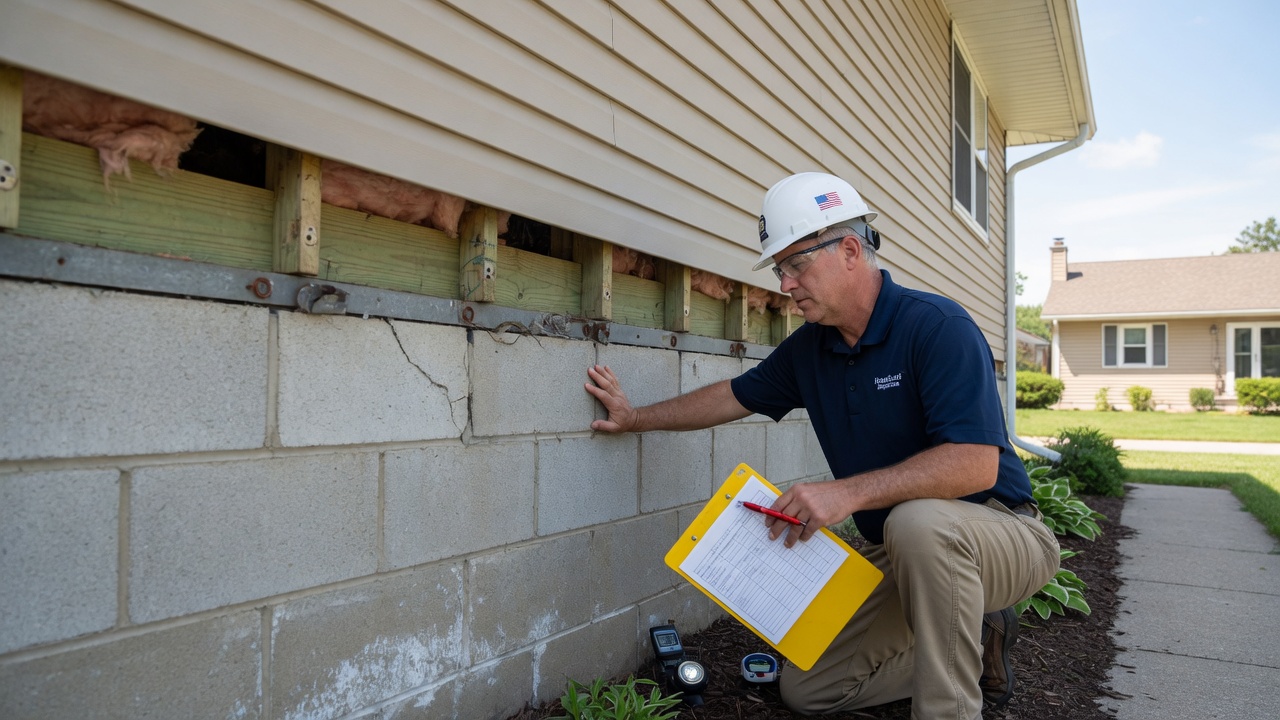
Michigan's extreme temperature swings — from below zero in January to the 80s and 90s in summer — create freeze-thaw cycles that stress concrete foundations. Hairline cracks in poured concrete walls are common and usually cosmetic. But horizontal cracks, stair-step cracks in block foundations, or cracks wider than ¼ inch can indicate structural movement that requires engineering evaluation.
In communities across Genesee County and Livingston County, homes built in the 1960s–1980s with block foundations are particularly susceptible. Buyers should understand that not all cracks are created equal — and the inspection report will flag them for further evaluation, not necessarily alarm.
Roofing Issues
Michigan's snow loads, ice dams, and temperature fluctuations take a toll on roofing systems. Inspectors commonly find:
- Ice dam damage. When heat escapes through the roof, it melts snow that refreezes at the eaves, creating ice dams that force water under shingles. Signs include water stains on upper-floor ceilings and damaged fascia boards.
- Aging shingles. Asphalt shingles in Michigan typically last 20–25 years. If the roof is approaching that age, expect the inspector to note it — even if no active leaks are visible.
- Inadequate attic ventilation. Poor ventilation accelerates shingle deterioration and contributes to ice dams. Ridge vents and soffit vents should provide balanced airflow.
Electrical Concerns
In older homes throughout Mid-Michigan, inspectors regularly find outdated electrical systems that need attention:
- Knob-and-tube wiring — Found in pre-1950s homes. This wiring lacks a ground conductor and can be a fire hazard, especially when insulation is present.
- Aluminum wiring — Common in homes built between 1965 and 1975. Aluminum expands and contracts more than copper, creating loose connections at outlets and switches that can spark.
- Federal Pacific or Zinsco panels — These panel brands have documented safety issues and may not trip properly during an overload. Inspectors flag them regularly.
- Missing GFCI protection — Outlets near water sources (kitchens, bathrooms, garages, exteriors) should have GFCI protection per current code.
Plumbing Issues
- Galvanized steel pipes — Common in homes built before 1970. These pipes corrode from the inside, reducing water pressure and eventually leaking.
- Polybutylene pipes — Installed in some homes from the late 1970s through the 1990s. These flexible gray pipes are prone to failure and are a significant concern for inspectors and insurers.
- Frozen pipe damage — Evidence of past frozen or burst pipes, particularly in crawlspaces or exterior walls with inadequate insulation.
The Buyer's Perspective: What to Do with Inspection Findings
Receiving an inspection report can feel overwhelming — especially for first-time buyers. A typical report is 30–60 pages long and lists everything the inspector observed, from significant structural concerns to minor maintenance items. The key is learning to distinguish between what matters and what's expected.
How to Read an Inspection Report
Most inspection reports organize findings into three categories:
- Major defects / Safety hazards — Items that pose immediate safety risks or require significant repair. These are the items to negotiate over. Examples: a cracked heat exchanger in the furnace, an electrical panel with known safety defects, structural movement in the foundation.
- Items needing repair or replacement — Components that are nearing the end of their useful life or have functional issues. Examples: a roof with 3–5 years remaining, a water heater showing age, a sump pump that needs replacement.
- Maintenance recommendations — Routine items that any homeowner should address. These are informational, not negotiation points. Examples: cleaning gutters, replacing HVAC filters, sealing a driveway.
Negotiating Around Inspection Findings
In Mid-Michigan, there are three primary ways to address inspection findings:
- Seller repairs the items before closing. The seller completes agreed-upon repairs, and the buyer verifies completion at the final walkthrough. This is the most common approach for specific, identifiable issues.
- Seller provides a credit toward closing costs. Instead of making repairs, the seller reduces the price or provides a credit that the buyer applies toward repairs after closing. This approach gives the buyer control over the repair process and quality.
- Price reduction. The buyer and seller agree to a lower purchase price that reflects the cost of needed repairs. This is simpler from a transaction standpoint but requires the buyer to fund the repairs independently after closing.
The right approach depends on the severity of the issues, the buyer's financial situation, and the competitive dynamics of the market. In a seller's market with multiple offers, buyers may have less leverage to request extensive repairs. In a balanced or buyer-friendly market, inspection negotiations are more common and more substantive.
The Seller's Perspective: How to Prepare for the Inspection
Sellers who prepare for the inspection — rather than being surprised by it — consistently achieve better outcomes. Here's how to get ahead of the process:
- Get a pre-listing inspection. This optional step lets you identify and address issues before buyers ever see the report. A clean pre-inspection strengthens your negotiating position and builds buyer confidence. Cost: $300–$500.
- Address obvious maintenance items. Fix leaky faucets, replace burned-out bulbs, tighten loose railings, and ensure all doors and windows operate. These small items signal a well-maintained home.
- Ensure access. Clear the way to the electrical panel, furnace, water heater, attic access, and crawlspaces. If the inspector can't access it, they'll note it — and buyers will assume the worst.
- Have documentation ready. Receipts for recent repairs, roof replacement, HVAC service, or waterproofing work demonstrate a history of responsible maintenance. Leave a folder on the counter for the inspector and buyer.
- Don't attend the inspection. Sellers should leave during the inspection. Buyers need space to ask questions and process findings honestly, and the inspector needs to work without pressure. For more on preparing your home, see our staging tips guide.
When to Walk Away vs. Move Forward
Not every inspection finding is a dealbreaker. Learning to distinguish between expensive-but-manageable issues and genuine red flags is one of the most important skills in the buying process.
Walk-Away Situations
- Significant structural failure. Foundation walls bowing inward, major settling that has shifted door frames and window openings, or compromised load-bearing elements. These are expensive to repair and may indicate ongoing issues.
- Extensive mold contamination. Surface mold in a basement corner is manageable. Widespread mold in HVAC ductwork, within wall cavities, or across structural framing is a health and safety concern that may require professional remediation costing thousands.
- Failed septic or well with contamination. A failed septic drain field ($10,000–$30,000+ to replace) or a well with bacterial contamination that can't be resolved may not be worth the cost, depending on the property's overall value.
- Seller refuses to address clear safety hazards. If the seller won't repair or credit a known safety issue — a defective electrical panel, a cracked furnace heat exchanger, or a collapsing retaining wall — consider whether this reflects the seller's overall approach to the transaction.
Move-Forward Situations
- Routine maintenance items. Gutter cleaning, caulking, HVAC filter replacement, weatherstripping — these are normal homeowner responsibilities, not reasons to walk away.
- Aging systems with remaining life. A furnace that's 15 years old but functioning well will need replacement eventually — but that's a known cost you can plan for. Budget for it rather than walking away.
- Cosmetic issues. Dated finishes, worn carpet, scuffed paint — these are staging and renovation opportunities, not inspection concerns.
- Minor code deficiencies. A missing GFCI outlet or an improper dryer vent can be corrected for minimal cost. These are negotiation points, not dealbreakers.
Special Considerations for Mid-Michigan Properties
Several property types in the Mid-Michigan market require extra attention during the inspection process:
- Lakefront and waterfront homes — Erosion, shoreline condition, seawall integrity, flood zone status, and lake association rules should all be investigated. A separate environmental or shoreline assessment may be warranted.
- Homes on well and septic — Common in rural Lapeer, Livingston, and Shiawassee counties. Budget for well water testing ($100–$200), septic inspection ($300–$500), and potential remediation.
- Older homes in Flint, Howell, Owosso, and Lapeer — Homes built before 1960 may have lead paint, knob-and-tube wiring, cast iron or clay sewer lines, and original plumbing. Budget for additional specialized inspections.
- New construction — Even new homes need inspections. Construction defects, incomplete work, and materials defects are more common than most buyers expect. See our new construction guide for more detail.
The Bottom Line
The home inspection is not something to fear — it's something to prepare for. For buyers, it's your best protection against unexpected costs and safety hazards. For sellers, it's an opportunity to demonstrate your home's condition and build buyer confidence. In Mid-Michigan's competitive market, transactions that navigate the inspection process smoothly — with realistic expectations on both sides — close faster and with fewer complications.
With over 20 years of experience across every community in this region, I've guided hundreds of transactions through the inspection process. I know what to expect, how to negotiate fairly, and how to help both buyers and sellers reach an outcome that works.
Schedule a consultation or contact me directly — let's make sure you're fully prepared for every step of the process.