
Finding the right home is only half the equation. In Mid-Michigan's current market — where well-priced homes in desirable communities like Grand Blanc, Fenton, Brighton, and Clarkston routinely attract multiple offers — the way you structure your offer can be the difference between acceptance and disappointment. The good news: you don't have to blindly overpay. A strategic offer combines strong fundamentals with smart contingencies, and that's exactly what sellers respond to.
With 20+ years of experience navigating offer situations across Genesee, Oakland, Livingston, Lapeer, and surrounding counties, I've seen every variation. Below are the strategies that consistently help my buyers win — without taking unnecessary risks. If you're just starting the home search process, our first-time buyer's guide covers the fundamentals of getting pre-approved and understanding closing costs.
Get Pre-Approved — Not Just Pre-Qualified
This is the foundation of any competitive offer, and it's non-negotiable. A pre-approval letter from a reputable lender tells the seller that a financial institution has already reviewed your income, assets, credit, and debt — and has committed to lending you a specific amount. A pre-qualification letter, by contrast, is often based on self-reported information and carries far less weight.
In Mid-Michigan's market, sellers and their listing agents routinely filter offers by the strength of financing. A full pre-approval with a local lender — someone the listing agent can actually call and verify — signals that your offer is as good as cash from a financing standpoint. If you're comparing lenders, ask each one to provide a pre-approval (not a pre-qualification) and make sure the letter states the loan type, down payment amount, and any conditions that have already been underwritten.
Earnest Money: Show You're Serious
Earnest money — also called a good-faith deposit — is money you put into escrow when you submit your offer. It demonstrates to the seller that you're financially committed to the transaction. If the deal closes, the earnest money is applied toward your down payment or closing costs. If you default on the contract without a valid contingency, the seller may be entitled to keep it.
In Mid-Michigan, earnest money deposits typically range from 1% to 3% of the purchase price. In a competitive situation, pushing toward the higher end of that range — especially on homes in the $200,000 to $400,000 range — sends a clear message: you're committed, you're financially prepared, and you're not going to walk away lightly. On a $275,000 home, a $5,000 earnest money deposit (roughly 1.8%) is solid. Bumping that to $8,000 (about 2.9%) in a multiple-offer situation can make a meaningful difference in how the seller perceives your offer.
Escalation Clauses: Your Automatic Safety Net
An escalation clause is a provision in your purchase offer that automatically increases your bid above competing offers — up to a maximum amount you specify — in defined increments. Here's how it works in practice:
- You offer $265,000 on a home listed at $259,900.
- Your escalation clause states you'll beat any competing offer by $2,000, up to a maximum of $280,000.
- If a competing offer comes in at $270,000, your offer automatically rises to $272,000 — you win without overpaying on the initial bid.
Escalation clauses are powerful tools, but they require careful thought. You need to set your absolute maximum — the number you're genuinely comfortable with — and stick to it. Your agent should also verify whether the listing agent is willing to accept escalation clauses, as some sellers prefer straightforward highest-and-best offers instead. In Mid-Michigan, escalation clauses are commonly used in Oakland County and higher-demand pockets of Genesee and Livingston counties where multiple-offer scenarios are most frequent.
Appraisal Gap Coverage: Bridging the Valuation Gap
In a competitive market, it's not uncommon for a home to sell above its appraised value. When that happens, the buyer faces a gap between the contract price and what the lender is willing to finance. This is where appraisal gap coverage comes in.
When you include appraisal gap coverage in your offer, you're committing to cover some or all of the difference between the appraised value and the purchase price with your own funds. For example, if you offer $280,000 and the appraisal comes in at $268,000, a $12,000 gap exists. With appraisal gap coverage, you've already agreed to cover that difference — the seller knows the deal won't fall apart over a valuation shortfall.
You can cap your appraisal gap coverage at a specific amount (e.g., "up to $10,000") to limit your exposure. This is one of the most effective ways to differentiate your offer, especially in situations where the seller has already received a competing offer at or near your price. It reduces the seller's uncertainty and removes one of the most common deal-killing obstacles in the transaction. For context on how property values and taxes break down across the region, see our property tax comparison guide.
Flexible Closing Dates: A Quiet Power Move
Most buyers focus on price when competing, but closing date flexibility is one of the most underused negotiation tools — and one of the most appreciated by sellers. Every seller has a timeline. Some need to close quickly because they've already bought their next home. Others need extra time to relocate, find a new place, or coordinate with their own move.
When you're making a competitive offer, ask your agent to find out — through the listing agent — what closing date the seller prefers. If you can accommodate that preference, state it explicitly in your offer. On a $300,000 home where two offers are within $5,000 of each other, the one that closes on the seller's preferred date often wins. It costs you nothing, and it signals that you're easy to work with.
Mid-Michigan's seasonal real estate cycle also plays into timing. Sellers listing in spring often want a quick close before summer. Fall and winter sellers may need more time. Knowing the seasonal dynamic helps you craft an offer that fits the seller's reality.
The Personal Letter: When and How to Use It
A personal letter to the seller — sometimes called a "love letter" — can be effective, but it needs to be handled carefully. The goal is to help the seller feel a connection to you as a buyer, not to check legal boxes. The most effective letters focus on:
- Why you love the home. Specific details — the kitchen where you'll cook, the backyard where your kids will play, the neighborhood you've been driving through — show genuine interest.
- Your financial readiness. A brief mention that you're pre-approved, have funds for closing, and are prepared to move forward can reinforce confidence.
- Flexibility and respect. Let the seller know you're willing to work with their timeline and make the process as smooth as possible.
Important: personal letters should never reference protected characteristics of the seller or buyer — race, religion, national origin, familial status, disability, or any class protected under the Federal Fair Housing Act and the Michigan Elliott-Larsen Civil Rights Act. Keep the letter focused on the home and the transaction.
When Should You Go Above Asking Price?
This is the question every buyer wrestles with, and the honest answer is: it depends on the data, not the emotion. Here are the scenarios where going above asking price can make strategic sense:
- The home is clearly underpriced. Some listing agents strategically price below market to generate multiple offers. If comparable sales support a higher value, going above asking may still represent fair market value.
- You're competing with multiple offers. When three or more offers are on the table, the highest price — combined with strong terms — typically wins. If the home is worth $275,000 and you're comfortable at $280,000, the extra $5,000 amortized over a 30-year mortgage is roughly $25 per month.
- The home has unique value. Waterfront properties, acreage, or custom-built homes in lake communities may justify a premium because comparable replacements are scarce.
- You plan to stay long-term. If you're buying a home you intend to live in for 7–10+ years, short-term market fluctuations matter less. Paying $5,000–$10,000 above asking is absorbed over time, especially in markets with consistent appreciation.
The situations where you should not go above asking: when you're stretching beyond your pre-approved budget, when the comparable data doesn't support the higher price, or when you're bidding out of emotional attachment rather than market logic. Our 2026 market update provides current pricing context across every county in the region.
Inspection Strategy: Protect Yourself Without Scaring the Seller
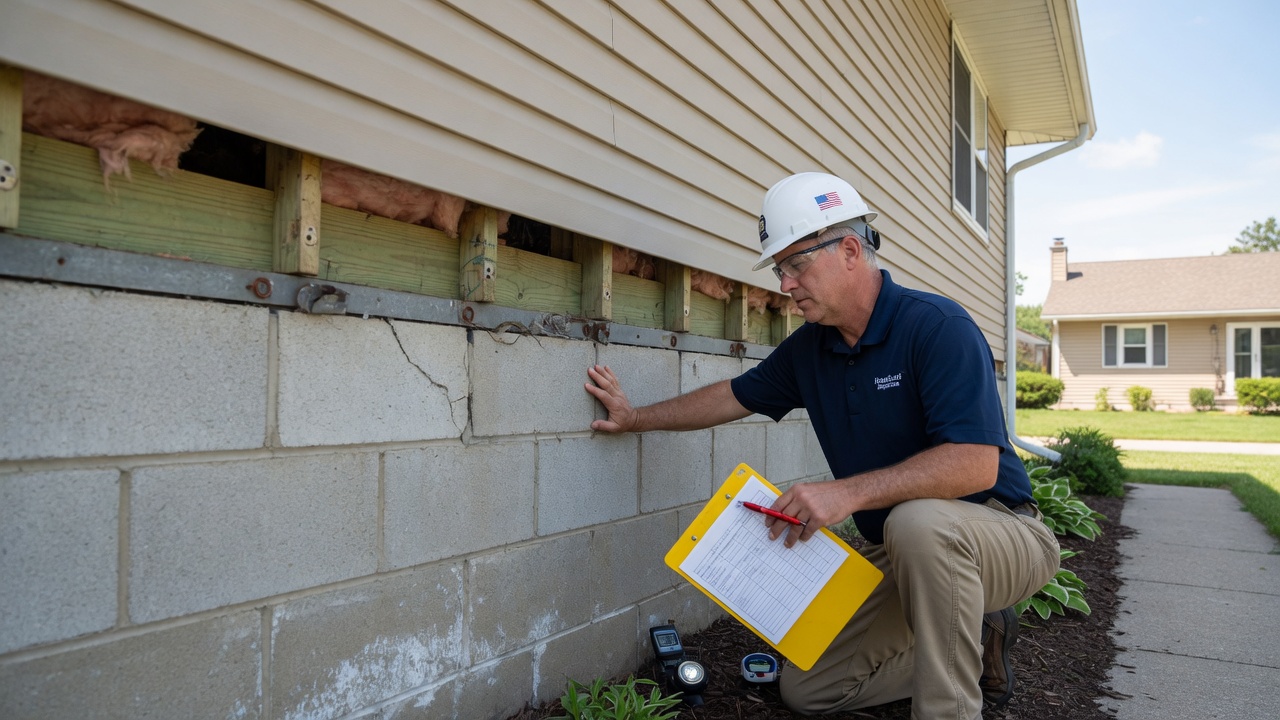
The inspection contingency is where many competitive offers get complicated. Some buyers are tempted to waive the inspection entirely to make their offer more attractive. I generally advise against that — especially in Mid-Michigan, where older housing stock, Michigan-specific weathering, and seasonal systems (sump pumps, water softeners, radon mitigation) create real inspection risks.
Instead of waiving, consider these alternatives:
- Limit the inspection to major items. Structure the contingency to cover only structural, mechanical, and safety issues — not cosmetic items or minor wear. This tells the seller you won't nitpick.
- Set a repair cap. Offer to handle repairs under a specific dollar amount (e.g., $2,500) yourself, with the seller responsible only for items exceeding that threshold.
- Do a pre-inspection. If the property allows it, schedule your inspection before submitting the offer. You enter the negotiation informed, and the seller sees a buyer who's done their homework. Our home inspection guide covers Michigan-specific issues to watch for.
Putting It All Together: The Anatomy of a Winning Offer
The strongest offers in Mid-Michigan combine several of these strategies. Here's what a competitive offer package might look like on a $270,000 home:
- Strong pre-approval from a local lender with verified underwriting
- $7,500 earnest money deposit (roughly 2.8%)
- Escalation clause up to $285,000, beating competing offers by $2,500
- Appraisal gap coverage up to $8,000
- Flexible closing date — accommodating the seller's preferred timeline
- Limited inspection contingency covering structural, mechanical, and safety items only
- Personal letter highlighting genuine connection to the home and community
Not every offer needs all of these elements. The right combination depends on the property, the competition, and your financial comfort level. That's where working with an experienced local agent becomes invaluable — someone who can read the situation, understand the seller's priorities, and tailor the offer accordingly.
The Bottom Line
Making a competitive offer in Mid-Michigan isn't about throwing money at the problem. It's about understanding the market, preparing thoroughly, and presenting an offer that makes the seller confident you'll close — on time, on budget, and with minimal friction. The buyers who win aren't always the ones who pay the most. They're the ones who come prepared.
If you're ready to make an offer — or you want help preparing before the right home hits the market — I'm here to guide you through every step. With 20+ years of experience across Mid-Michigan, I know what sellers are looking for, and I'll help you craft an offer that gives you the strongest possible position.
Schedule a buyer consultation or contact me directly — let's get your offer accepted.