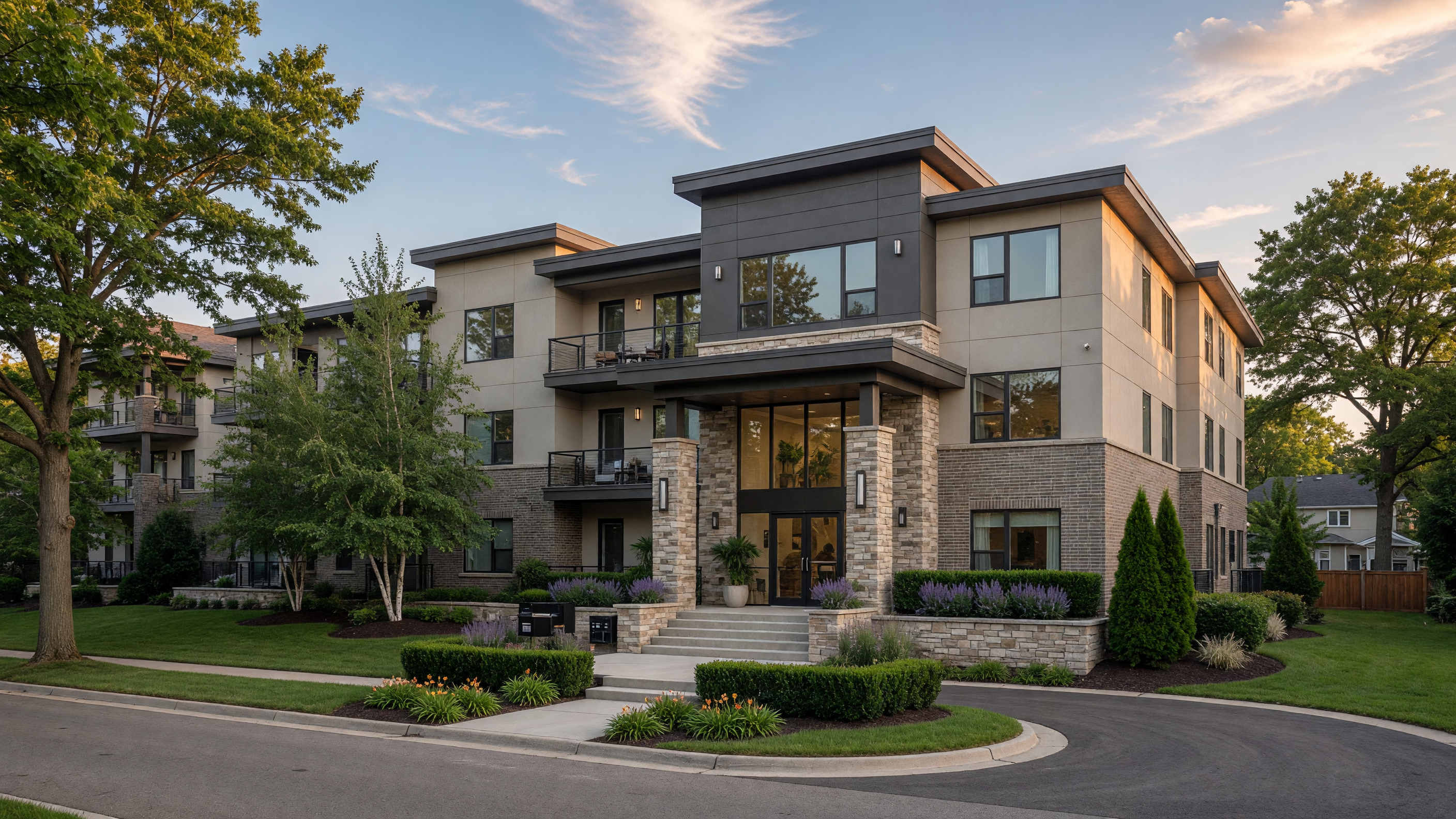

Condominiums represent a distinct and often misunderstood segment of the Mid-Michigan housing market. For first-time buyers looking for an affordable entry point, downsizers seeking low-maintenance living, or professionals wanting a lock-and-leave lifestyle, condos can be an excellent choice — but only if you understand what you're buying.
Unlike single-family homes, condos come with a layer of shared ownership, community rules, and financial obligations that require careful evaluation. After 20+ years of helping buyers navigate the Genesee County, Oakland County, and Livingston County markets, here's what every condo buyer in Mid-Michigan should know.
Condo vs. Single-Family Home: Understanding the Trade-Offs
The fundamental difference between a condo and a single-family home isn't the layout — it's the ownership structure. When you buy a condo, you own your individual unit and share ownership of common areas (lobbies, parking lots, landscaping, pools, elevators) with every other unit owner in the community. That shared ownership comes with both benefits and responsibilities.
The advantages of condo ownership:
- Lower maintenance burden. Exterior maintenance, landscaping, snow removal, and common area upkeep are handled by the HOA. For busy professionals, frequent travelers, or retirees who want to spend time on life rather than yard work, this is a significant lifestyle benefit.
- Lower entry price. Condos in Mid-Michigan typically price well below comparable single-family homes in the same area, making them accessible for first-time buyers and those on tighter budgets.
- Amenity access. Many condo communities offer amenities that would be cost-prohibitive as individual homeowner upgrades — pools, fitness centers, community rooms, walking paths, and maintained grounds.
- Community security. Condo buildings and gated communities often provide enhanced security features — controlled entry, security cameras, and the natural surveillance of neighbors in close proximity.
The disadvantages of condo ownership:
- HOA fees. Monthly HOA dues — typically $200–$500 in Mid-Michigan — cover common area maintenance, insurance, and reserves. These fees are mandatory and increase over time. They must be factored into your total monthly housing cost.
- Limited control. Major decisions about the community — assessments, rule changes, capital projects — are made by the HOA board. Your individual control over your living environment is more limited than with a single-family home.
- Resale considerations. Condos can take longer to sell than single-family homes, particularly in markets where buyers have many options. The condition of the HOA's reserves, the building's physical condition, and any pending special assessments all affect resale potential.
- Rules and restrictions. Most HOAs have rules about pets, rentals, renovations, noise, and exterior modifications. These rules protect property values but restrict personal freedom in ways that surprise some buyers.
HOA Due Diligence: What to Review Before You Buy
The single most important step in any condo purchase is thorough HOA review. This isn't optional — it's the difference between a confident purchase and a costly surprise. Here's what you need to examine:
The HOA financials. Request and review the community's budget, balance sheet, and reserve study. A healthy HOA maintains reserves equal to at least 50–70% of anticipated major repair costs (roof replacement, parking lot resurfacing, elevator maintenance, exterior painting). Communities with underfunded reserves are a red flag — they're likely headed for special assessments.
The reserve study itself. A reserve study is an engineering assessment of the community's major components and their expected remaining useful life. It tells you when the big expenses are coming — and whether the HOA has saved enough to cover them. Ask for the most recent reserve study and compare the recommended reserve contributions to the actual budgeted amounts.
Special assessment history. Special assessments are one-time charges levied on unit owners to cover unexpected or underfunded expenses. A community that regularly issues special assessments — especially large ones — signals poor financial management or inadequate reserves. Ask for the assessment history for at least the past five years.
Meeting minutes. HOA meeting minutes reveal the community's real concerns — ongoing disputes, deferred maintenance, upcoming projects, and board dynamics. They're often the most revealing document you'll review, and many buyers skip them entirely.
The CC&Rs (Covenants, Conditions & Restrictions). These governing documents define what you can and can't do with your property. Pay close attention to pet policies, rental restrictions, renovation approval processes, and any rules about parking, storage, or use of common areas. If you plan to rent the unit in the future, verify that the CC&Rs allow it — many HOAs restrict or prohibit rentals.
Price Ranges: What Condos Cost in Mid-Michigan
One of the strongest arguments for condo ownership in Mid-Michigan is affordability. Condos in the region offer significantly lower entry points than single-family homes while still providing ownership equity and potential appreciation.
Here's a general overview of condo pricing across the region:
- Downtown Flint: $60,000–$150,000. The most affordable condo market in the region, with loft-style units in converted historic buildings and newer construction along the riverfront. An excellent entry point for first-time buyers and investors.
- Grand Blanc: $150,000–$250,000. A small but steady condo market with options in established communities. Popular with young professionals and downsizers who want Grand Blanc's schools and location without single-family maintenance.
- Fenton: $150,000–$300,000. Condos near downtown Fenton and around the lake areas offer a combination of walkability and low-maintenance living in one of Genesee County's most desirable communities.
- Oakland County (Clarkston, Lake Orion, Waterford): $175,000–$400,000+. Oakland County offers the widest range of condo options, from modest garden-style complexes to luxury maintenance-free communities. Higher price points reflect the county's overall market strength and proximity to metro Detroit.
- Livingston County (Brighton, Howell): $200,000–$375,000. Condos in Livingston County tend to be newer construction with modern finishes, reflecting the county's growth and the demand from professionals commuting to Ann Arbor and Detroit.
Popular Condo Communities Worth Knowing
While Mid-Michigan's condo market is less dense than metro areas like Ann Arbor or downtown Detroit, several communities have established strong reputations:
University Park (Flint): A well-maintained community near the University of Michigan-Flint campus, popular with young professionals, graduate students, and faculty. Affordable price points and a convenient downtown location make it one of Flint's most accessible ownership options.
Grand Blanc Township condos: Several small condo associations throughout Grand Blanc Township offer ranch-style and two-story units in the $150,000–$225,000 range. These communities appeal to first-time buyers who want to be in the Grand Blanc school district without single-family home prices.
Lake Orion and Clarkston area condos: Oakland County's condo inventory includes well-managed communities in the Clarkston and Lake Orion area, often with wooded settings, community amenities, and easy access to M-24 and I-75. These communities tend to attract move-up buyers and empty-nesters transitioning from larger homes.
Financing Differences: What Lenders Look For
Condo financing has specific requirements that differ from single-family home loans. Understanding these differences upfront prevents surprises during the mortgage process:
- Condo project approval. Fannie Mae and Freddie Mac require that the entire condo project — not just the individual unit — be approved for financing. Lenders evaluate the project's financial health, owner-occupancy ratio, pending litigation, and HOA reserve adequacy. A project that fails this review may not be financeable through conventional lending.
- Higher down payment requirements. While conventional loans can be obtained with as little as 3–5% down on single-family homes, condo purchases sometimes require 10–20% down, particularly for investment properties or projects that don't meet all conventional guidelines. FHA and VA loans are available for condos, but the project must be FHA/VA-approved.
- HOA fees in debt-to-income ratios. Lenders include your monthly HOA dues when calculating your debt-to-income (DTI) ratio. If you're already at the edge of qualifying for a mortgage, the additional $200–$500/month in HOA fees can push you over the limit. Factor this into your pre-approval planning.
- Owner-occupancy ratios. Both Fannie Mae and FHA have minimum owner-occupancy requirements for condo projects. If too many units are investor-owned (typically over 35–50%), the project may not qualify for certain loan types. This matters for resale — check the ratio before buying.
Who Condos Work Best For
In my experience, condos are the strongest fit for specific buyer profiles:
First-time buyers who need a lower entry point to build equity. A condo in the $100,000–$200,000 range can be a smart stepping stone to a single-family home in 3–5 years, building credit, equity, and homeownership experience along the way.
Downsizers and empty-nesters who want to leave behind the maintenance demands of a larger home. For couples or individuals transitioning from a 2,500-square-foot house, a well-managed condo offers a simpler, more manageable lifestyle without sacrificing ownership benefits.
Busy professionals who travel frequently or spend limited time at home. The lock-and-leave convenience of condo living is genuinely valuable for people whose careers take them away regularly.
Investors looking for rental income, particularly in downtown Flint and near educational institutions where rental demand is strong. Just verify that the HOA allows rentals and review the financials carefully.
The Bottom Line
Condos in Mid-Michigan offer real value — affordable entry points, low-maintenance living, and community amenities that enhance daily life. But they require a different kind of due diligence than single-family homes. The HOA's financial health, the project's financing eligibility, the community's rules, and the reserve adequacy all matter as much as the unit itself.
If you're considering a condo purchase in the region, I can help you evaluate specific communities, review HOA documents, and navigate the financing process. With over 20 years of local experience, I know which condo communities are well-managed and which ones carry risk — and that knowledge can save you thousands.
Schedule a consultation or contact me directly — let's make sure your condo purchase is a smart one.